A Mother’s Day for Goddesses

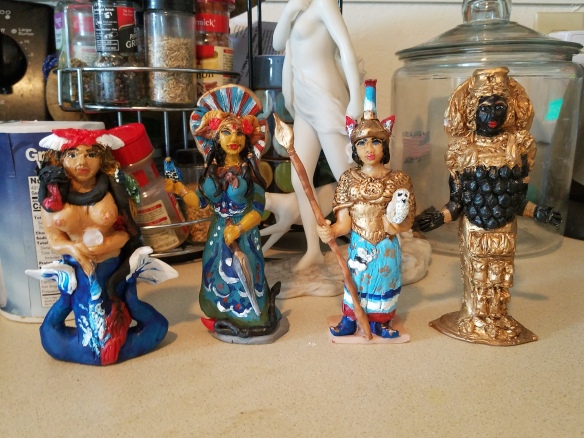
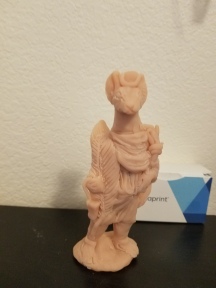
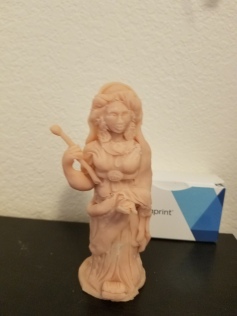
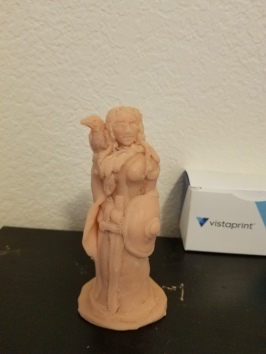
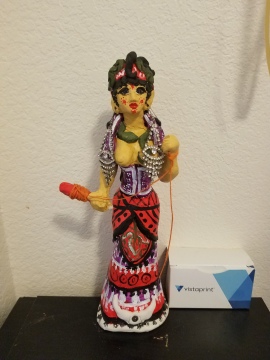
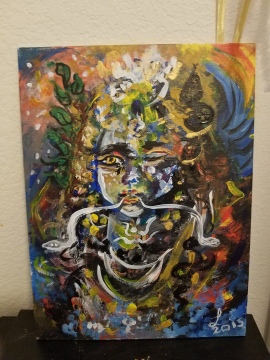
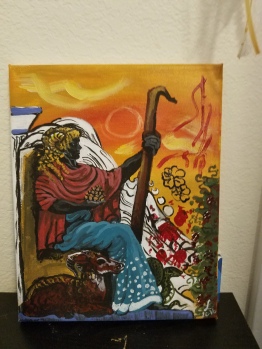
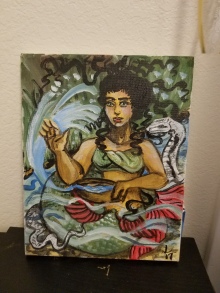
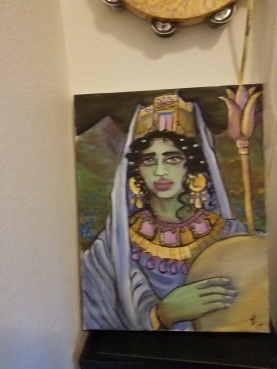
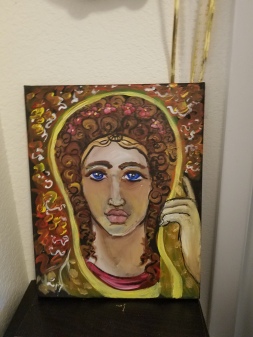
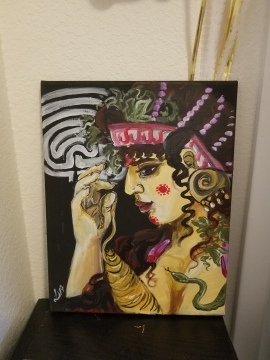
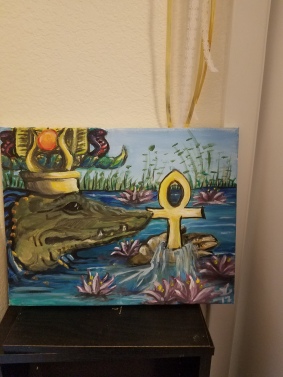
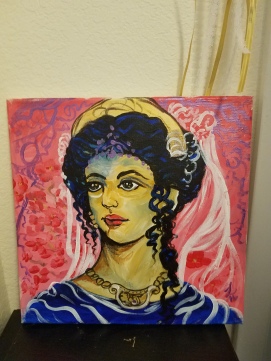
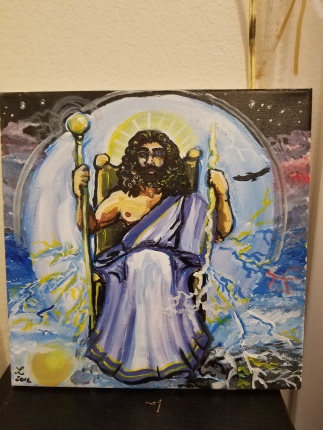
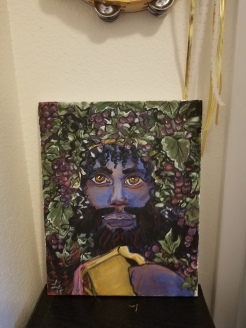
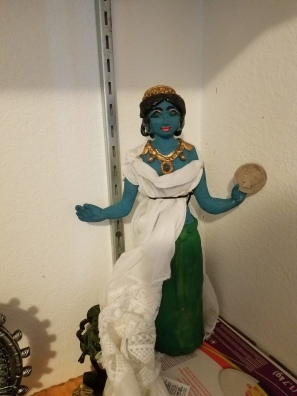
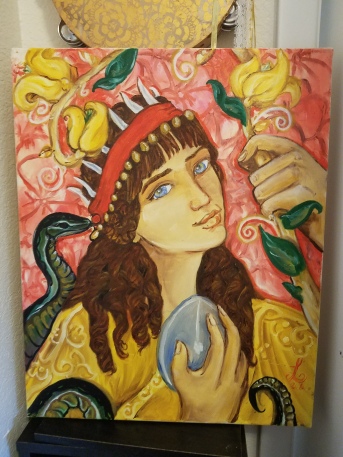
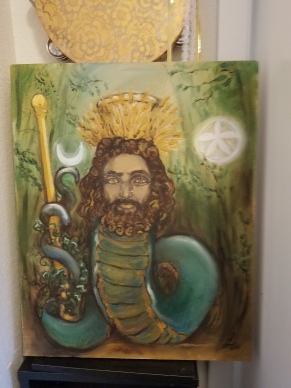
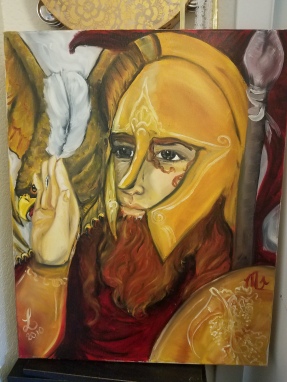
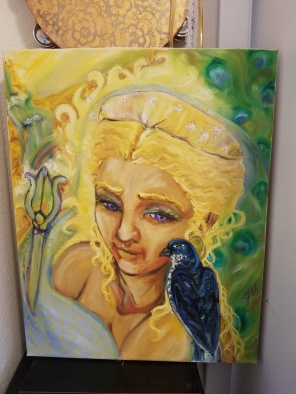
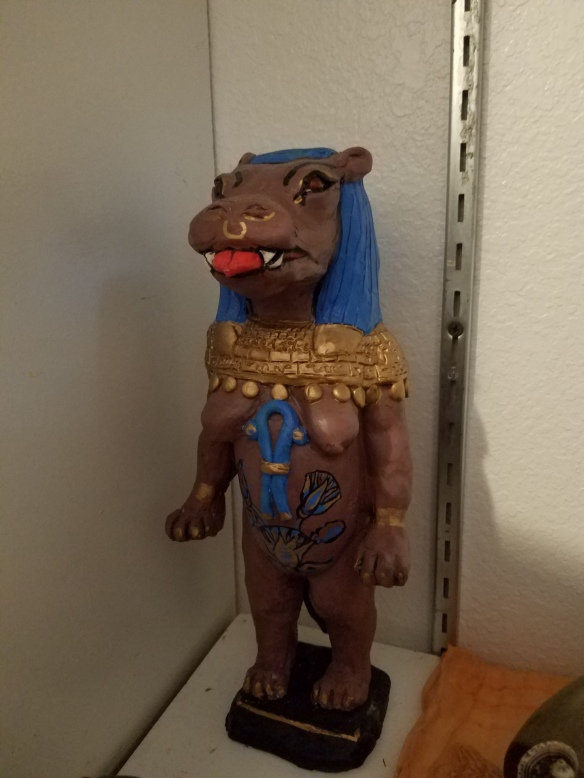
With Mother’s Day here I give appreciation to the goddesses in my household who are mothers in some fashion or another: Rhea-Durga, Hera-Lakshmi, Aphrodite, I include Artemis in this as the nurse of life, and also in my syncretic worship of Artemis identified with Parvati, and most especially Leto.

May the arms of the motherly goddesses embrace us all with affection, love (even tough love when necessary lol), and compassion. So I give honor and worship to them with all love!

Final submission for Delia contest, submission number 9

Your brilliant light brightens those souls who love You,
Who sees beauty in many and loves without bounds.
Clear-sighted Apollon, we honor your birth anew
with poetry, dance, and melodious sounds.

To You we offer first fruits baked with Demeter’s grain
and cake iced with sugar, past and present combined.
We challenge ourselves to offer still more again
through a year filled with Your arts of body and mind.

May our efforts be pleasing to Your glorious eyes.
May we receive Your blessings in each of our lives.
May we be ever grateful for Your presence and light.
May we never forget You in the darkest of night.
May our work keep us mindful of You through each day,
and may we follow Your guidance as we make our way.

Delia/Thargelia submission #7

Gymnopaidai (For Apollon)

A choral dance of a hundred youths, Apollon,
used to stamp your praises into the sand of dance-grounds
with sweat and steps and skin uncovered.
What songs did they sing?  What figures did they form?
At Thera and at Sparta, it was not Dionysos
who was praised with phallic dances, but you,
by a hundred boys on the verge of adulthood.
And, did the young women, enthralled at the sight,
likewise honor you in similar rites
hidden from the eyes of the public?
All-seeing Phoebus, the courser across the sky,
Lykeios, fast-running wolf of Hyperborea,
even secret rites are known to you
from city to city, isle to isle, and on every continent.
I am no civic patron, nor voice in the assembly,
and the youths of every town in this land
are no longer taught how to honor the gods.
I cannot present you with even ten youths,
young men and women and those who are neither,
to dance for you under the cover of summer sun
with nothing but clouds’ shadow adorning them.
Therefore, instead, I offer you these words,
simple, naked, clumsy, but devoted,
the words which come with age more easily
than fluidity and grace come with youth’s vigor.
Would that it were a thousand dancers,
but our thousand praises and paeans magnify you
great Apollon, son of Leto, brother of Artemis,
the Pythian, patron of Muses:  may my words dance for you!

Apollon and the Serpent

The myth of the dragonness Delphyne is perhaps one of the best known myths of Apollon out there, and in ancient Delphi was accorded an ancient festival, Stepteria, the crowning festival in which the reenactment of the slaying took place, and after the return of Apollon libations poured out upon the tomb of Delphyne. But as modern worshipers we come across issues of how we interpret myths such as this. There are views, that run excessively contrary to the myth perserved in the Homeric Hymn to Pythian Apollon, that Delphyne was a goddess of Delphi that Apollon killed in order to usurp the oracle. This becomes one in a series of myths involving the gods of Hellas which indicate a usurping of goddess cults by these younger gods according to many Goddess spiritualists and in their literature. So much so that there are women out there who have an aggressive dislike of Apollon as a female-hating deity primarily based on this interpretation of the myth of Delphyne. However, not only is there no mythical support for this interpretation, but there is also no evidence that Delphyne herself was ever a goddess. Rather she played an important function as a kind of guardian daimon of the sacred oracular spring of Delphi.

The more common interpretation, based largely from a strict interpretation from the hymn, is that Delphyne is wholely a monster that serves as an oppositional force to Apollon. The problem I have with this is that she doesn’t represent anything that Apollon doesn’t do himself, and therefore does not really represent much of an opposition to his nature. Like Delphyne’s description, Apollon too is a plague bringer and functions in the destructive capacities of nature. The only thing that seems to set Delphyne in truly poor light is that she is set to serve as nurse to Typhon, the enemy of the gods and goddesses, and that she guarded the sinews and ligaments of Zeus when Typhon ripped them from his body and hid them in her cavern (which were recovered by the ingenuity of Hermes and the hero Cadmus). However, despite these more unpleasant associations, much iconic art regarding Delphi displays the Pythian serpent wrapped around the Omphalos at the temple, which strongly indicates to me that Delphyne, through her death at the hands of Apollon was transformed. She retained her guardian role but as a beneficial daimon of the oracle, which may have translated to serpent handling in various cult centers of Apollon. This may also have to do with Apollon himself being a serpentine god, and may also play into his relationship with Delphyne at Delphi, but I will get to that in a moment. What is clear is that Apollon is often depicted in the company of serpents in often in a non-aggressive arrangement.

Leto1 (1)

My own opinion runs further with this in noting that in ancient astronomical poem the seat of Koios (the polar star, axis of the heavens) is considered the great eye of a celestial dragon, often malevolent in character according to this poem. Scholars have used this observation to draw correlations between the celestial dragon at the axis of the heavens and the terrestrial dragoness at the navel of the world, making a reflective joined pair in so much that the myth of Apollon’s acquisition of the oracular site runs simultaneously with another local myth at Delphi that his grandmother Phoibe gifted him with her part of the oracle as part of his inheritance (the other half he received from Poseidon via a trade for one of his own sacred islands). As such you have Phoibe firmly established at Delphi in this mythic reference just as Koios is established at the axis pinning Ouranos in place from above. It is then reasonable to suggest that these dragons are intimately connected on some level with Koios and Phoibe. Perhaps Koios and Phoibe took the form of these great serpents? Perhaps they are daimons associated with each of their domains? But there does appear to be a rather firm link between them that underlines the actions in the conflict with Delphyne. That the destruction of her form was necessary to join her to Apollon in his inheritance of the oracle…perhaps as some kind of consort spirit. It is certainly suggestive that Delphyne carries a name very similar Apollon’s and Artemis’ epithets Delphinios and Delphinia, which are associated with the Dolphin (the astronomical sign that rises in Delphi in the spring during which these rites occur, which like the serpent sinks hidden into the unknown to rise again to the surface world) but are also suggested to play from the name of Delphyne.

Delphyne dragonness

This image of Delphyne is particular interesting, from a vase painting house in the Louvre, in which we see Delphyne portrayed in a form like the eastern Naga. She possesses the upper body of a woman, and we see that she has one hand grapes the omphalos upon which Apollon is seated (the tripod is portrayed within the omphalos which may be an identification of his holy seat with the omphalos itself) and the other hand is extended towards the god. She also appears to be winged and has a kind of serpent crown which makes her look quite similar to this:

naga kanaya_statue

It would be remiss of me to not mention that Delphne is not the only naga-like daimon that we have. In fact this form is usually named for the common Ekhidna, two of these daimons bearing this name. And so the serpentine daimons are often just classified as Ekhidnas. But I think that naga is perhaps a best description of what they are as a host of daimons that dwell within the earth, or that at minimum Delphyne should be considered as such based on this description:

“Nagas can have a beneficial, neutral or hostile influence on human beings. Like their Chinese dragon counterparts, the Nagas are responsible for controlling the weather, causing droughts by withholding rain when they are offended and releasing rain when they are propitiated. Pollution of their environment or disrespectful acts such as urinating or washing soiled clothes in a Naga inhabited stream, can result in illnesses or Naga afflictions. Leprosy, cancer, kidney problems and skin ailments are all viewed as possibly being Naga related diseases.”

If Delphyne was a Naga type of daimon who inhabited Castalian spring. She would thus have been part of a feminine triad in Delphi for the oracle of Ge…the spring nymph Castalia, the first priestess of Ge–the nymph Daphne, and then Delphyne the guardian of the spring. The Homeric hymn states that she worked evil against men who came past the spring…although usually their flocks of sheep. Here is the thing, if a Naga type daimon dislikes soiling of the waters that she lives in, do you think she is going to be crazy about shepherds with their dirty wooly sheep traipsing around her home? My guess is that she would react poorly to them…specifically the sheep, and less towards men (but probably turning towards men when they try to protect their sheep). Delphyne is a sense made the oracle a bit inaccessible in these early stages, for which men lamented to the gods. We must recall that in one version of the Delphic myth that the Phocian villagers of the area entreated Apollon to strike her with their cries paie paie. By his destruction she was purified and became one with the land as her flesh became the soil of the sacred precinct, and therefore merging with the sacred waters as well as the land itself which would effectively in her “death” have her acting as a spirit of Delphi in general now rather than a guardian daimon of just the spring. Or at least this makes sense to me.

In this picture you see a scene of what appears to be sacrifice to Apollon. There is the priest at one side of the Omphalos with the cow at the other side being led forward. Apollon is at the far side. Coiled around the Omphalos is Delphyne.

python delphi

In the next picture it is a scene of Delphi in which Apollon is warding off the Erinyes to spare Orestes. The winged Erinye is to the right of Apollon who holds his laurel (a symbol of purity against the taint of their presence) between himself and the daimon. Behind Orestes is Athena, with likely Ge in the furthest corner. However the image that I am focused on here is the female daimon hovering above, somewhat disembodied, the tripod. She appears to be in a sense a part of the tripod in this depiction and crowned with serpents just as Delphyne in the first image. I would suggest that this is not an Erinye, since she is set apart from them, but is rather the benovolent spirit of Delphyne as the daimon of Delphi. This concept is not a new one either as we are looking here at a scene from the Oresteia. For the Erinyes too gain a beneficial presence in Athens as the Eumenides who bring prosperity even as they can strike down against the city if they fail to pay them due honors. Delphyne is acting for Delphi what I imagine the Erinyes as the Eumenides are acting for Athens.

Orestes Delphi

Of course this is not the only Python myth, but I think perhaps one of the most important ones. I would like to take this moment to state that it is based on my observation that I regard Python as a title of being that were disposed of by Apollon in similar ways, as we know from the Homeric Hymn that it is merely a title because he causes them to rot. But this does not always preserve the identity of who the other figures are. What is certain is that they are distinct from each other. The second Python is the male serpent that often gets confused with Delphyne. He is not a gaurdian serpent of the spring or connected with Delphi in any manner, but rather is a son of Ge whom Hera sends out to pester Leto. He looses track of her, presumably when she arrives on Delos, and goes to ground. It is Python whom Apollon and Artemis together (and sometimes Apollon alone) slay in vengeance for their mother’s torment. In this version we have the twins going to Crete for the purification of their murder, unlike Apollon’s departure for Hyperborea in self imposed exile for a divine year (9 mortal years..for which the original games were patterning off of his original exile and return).

It is quite possible that this Python accounts for two very different activities going on that are accounted for in regard to the Stepteria. One is the burning of a serpent (it is unclear if it is a real serpent or not) to represent the fires of Apollon consuming her. The boy acting as Apollon throws her into a burning tent and is said to depart afterward. The second deals with the male element in which we have a sword fight between a man acting as Python and boy acting as the god, the boy wins. The representation of Python as a man fighting with a sword brings to mind Pausanias’ descriptions dealing with Phocis and the Delphic myth of Tityus, who like Python, was considered the son of Ge and an aggressor against Leto, and who Pausanias makes some connection between the burial of Tityus and the burning of an effigy of a man for which foreigners were not permitted to be present for. It is reasonable that perhaps the second Python was not literally a serpent or dragon but a son of Ge who was pursuing Leto and tormenting her. And who was depicted as slain by both Apollon independently, and by Apollon and Artemis together. The fires consuming Tityus, causing him advance decay would run parallel to that Delphyne. Of course the Phocians seemed to have regarded the giant Tityus as a heroic being and paid homage to his grave from what I recall Pausanias saying.

img_tityos

Lastly I wanted to deal with Apollon himself as a serpentine god. Unlike gods who are given the company of serpents, there are few gods who take the form of serpents. Zeus is one that well known, but less known is Apollon, who not only consumated a relationship in the form of a serpent, but most notably arrived with his statue of himself as Apollon Karneios to Corinth from Epidaurus in the form of a serpent according to Pausanias account of it. If Apollon is arriving as a serpent it may be because a serpent was placed within the cart to travel with the statue, and that it was from Epidaurus suggests the Epidaurians may have viewed Apollon particularly as manifesting in the form of a serpent. Philosophers have said that Asklepios is contained within Apollon, Asklepios who is portrayed with a great serpent wrapped around his staff, the son of Apollon who gifted him with the healing arts. But given the context of Apollon’s arrival from Epidaurus is it possible that Epidaurians perceived the great serpent on the staff of Asklepios as a manifestation of Apollon aiding the work of his son? In which case the serpent that consumed of the offerings and moved among the sleeping ailers would have represented the benevolent presence of Apollon brought forth by Asklepios to aid mortals. Other imagery which has Apollon riding a dragon-drawn chariot may also reflect Apollon’s movement in relation to serpents on another level.

Incidentally Apollon is involved in the myth of another Naga-like daimon by name of Poena. This serpent daimon came up from the earth when bidden by Apollon to act as his vengeance for the death of his infant son Linus who was torn apart by dogs. She visited all manner of plague and illness to the people and destroyed their children. When she was killed by the people, the ill fortune did not end and they had to seek Delphi in order to propitiate Apollon to set aside his further wrath for the murder of Poena. In this instance we have a serpentine daimon acting on his behalf for a grievous wrong committed.

In this manner we can appreciate the serpent as a poignant symbol of Apollon, and gain a new appreciation of his interaction with the dragonness Delphyne.

PBP: G is for Goddesses, Gods, Generation, Goats and Grain

I decided to get a jump start on this early in the week in case I forgot about it Friday, and really also because this is inspired partially by a conversation I had recently. I know the title is a bit of a mouth-full but all of these ideas shall be present in the post.

First off, I love my religion as it is populated with a number of gracious goddesses and kindly gods. There is never a lack for a divine being for whatever the situation may be or for any function within nature. That said, I can appreciate too that there is no literal creator god in the Hellenic religion (as in a divine being who created all the cosmos outside of it). Rather the gods and goddesses are part of the cosmos. This of course resolves any problem of trying to determine if the cosmos were created by some elusive divine mother, or by a divine father. And really I have issues with the very idea of a singular creator outside of the cosmos, because regardless of which way it goes it is going to be misogynistic and utterly related to nature, and as I firmly believe that the gods are part of nature and what we see physically in nature reflects the divine, I have issue with this idea that EITHER a father God or a mother Goddess can be an omnipresent creator. Now conversely within Hinduism you have a unified expression of a kind of Mother-Father divinity by way of creator pairs that are as one (Brahma-Saraswati, Vishnu-Lakshmi, Shiva-Parvati/Sakti). They are one together. Saivism has that Shiva/Siva as predominant and yet Sakti is a part of him, and they are one together. Shaktism is in reverse, in which Shiva is part of Sakti. They are together, both god and goddess and procreative function of the cosmos. Such as the symbolism of the drum of Siva in which the two parts of the drum represent the male and female which together create. This is not unlike the division of the Olympians equally among females and males creating specific pairs of unified function. Most obvious being Zeus-Hera as a marital unity, and Apollon-Artemis expressed as a twinning unity. There are some philosophical traditions that even suggest that Zeus and Hera are the same as Apollon and Artemis on a different level, and that this follows to Persephone and Dionysos at another level again. I am still unsure how I feel about this, but I am just putting it out there.

This is not say that there aren’t different kinds of creation that can be done solo, or even among being of the same sex. I do not want to indicate that all forms of creation are necessary between a goddess and a god. However, procreative creation of life is. There are very few instances where you see a god create by themselves, and usually it is not by themselves in the strictest sense. Athena is born from the head of Zeus and is called motherless, and yet she was conceived in the womb of Metis whom Zeus swallowed, following which the gut of Zeus (rather like the gut of Kronos), fathered Athena and she burst from his skull. But Zeus did not conceive her on his own, he just bore her on his own. In contrast we have Hera who out of anger at Zeus over the birth of Athena concealed herself away to birth Hephaistos alone. Now there is some interpretation that this conception was done solely of herself, but we also have Hephaistos called the son of Zeus in many variations. A clue may be given in which the myth is expanded upon by the Romans that Flora aided Hera in the secret in how to conceive by herself. Now flowers (that which is in the domain of Flora), although they cannot fertilize themselves) procreate asexually. Pollen is transferred, without any sexual contact or form of union by a third party between blossoms (in the form often of bees or butterflies etc). Therefore what we likely see with Hera’s conception of Hephaistos is the goddess conceiving of the god in a manner not unlike artificial insemination. Zeus fathered Hephaistos, but the conception was not born of union between Zeus and Hera in their marital bed, but apart. Hephaistos was so closely identified with Zeus by some regions that we find in Arkadia that Hephaistos is called the Warish Zeus. A somewhat related myth would be the conception of Cecrops who was conceived when the semen of Hephaistos spurted and landed on the thigh of Athena as she was evading him, which she thus wiped to the earth from which Cecrops was born. Here we have a more complicated imagery though because we have the fertilization occuring between the figures of Hephaistos and Athena, but Athena remains without child because the earth itself served as the womb (though she looked after Cecrops with what I would say is nearly maternal attention).

This procreative generation between male and female occurs through the most potent symbolism of fertility, maternity and paternity. Particular if we consider the cultic importance of the he-goat and she-goat (and also the bull and the cow alternatively). The identification of Demeter with Europa who was conceived by the bull Zeus speaks to this. As do many instances in which we find gods inclined towards fertility and nurture associated with these. Demeter, Aphrodite, and Hera are all associated to varying degrees with cows, as Poseidon, Zeus, Apollon and Dionysos for instance are linked in varying degrees with bulls. Likewise we have Artemis (the great nurse), Apollon, and Pan associated with goats, and the nursing of the infant Zeus by the goat Almathea.

The fact of the matter one would be very hard pressed to find any historical reference to an ancient religion in which you have a lone deity which procreates solely of him or herself. At least not until the Abrahamic religions. As such goddess spirituality typically just reverses the mode of the Ambrahamic religions, to make them goddess-centric instead. Therein you have a goddess who bears the cosmos of and by herself, and then conceives herself (and in some slightly more polytheistic trends..an actual separate daughter). Sometimes you will also find her conceiving a son as well, though this seems to be an optional variation. I have nothing against people who want to have this world view, it just feels strange to me when it is approached using the Hellenic gods. Demeter (who is often used as a model in this spirituality) did not conceive of Persephone of herself alone, she was conceived by Zeus (who incidentally I hate being referred to by goddess spiritualists as a PIE sky god, he is not the sky, his domain is aether, the fluid energy which surrounds every living thing, the falls in rain to fertilize the ground and collides and snaps in lightning in a storm). Nor did she rear Persephone, who is symbolized by the wheat ear, without the participation of any gods for Apollon’s domain of light nurturers the wheat to maturity and for this purpose he is called the god who brings the golden harvest from Hyperborea. The gods and goddesses are working together in a unified whole, not apart from each other. Sometimes goddesses with other goddesses for certain things, and gods with other gods, but always they are in tandem together, and especially among the goddesses and gods together to bring about the creation of life. I can’t even agree with statements that say that god is both female and male because god has no biological gender, but is called mother because she bears forth new life. This seems to be a conflict in ideas in which on one hand gods and goddesses are genderless, but yet it concepts of a creator deity is a mother goddess because she bears forth new life. This concept argues against itself in my opinion because you can’t be without gender and have an identity based off a biological sex activity. Well you can, but not without conflict of reason. I can accept that gods and goddess create by their unification with each other, because I do ascribe to divine gender and therefore I recognize that both are important for creation that is reflective in nature, including Mother Goddesses (such as Leto, Rhea, Demeter etc), as these are balanced out with Father Gods. Whereas they don’t have biological bodies and such urges, they do have functions of their domains which correspond on a symbolic level of female and male functions, goddess and god. Just a bit more expansive.

And then you have Selene, but I believe that she is called male and female in her orphic hymn is attributed more to the fact that she takes on the light of her brother Helios in order to shine (something that was recognized by the ancient Hellenes). Therefore she is filled with male essence which she radiates even as she is female. Rather being both male and female in the literal sense and still being functionally a goddess in every sense.

PBP: E is for Everyday Rites

So I realized that accidentally messed my alphabet up and did H out of order with the rest. So if you are confused, that is what happened. And so you wont’ see an H post later because you already got it :P

The idea for E is entirely cribbed from a blog I follow, here, because I thought it was a pretty awesome idea for the E entry.

Despite how much noise we all tend to make about major festivals and occasions, the real heart of the religious experience lies in the oikos, and what we do on a daily basis. Now I follow a fairly rigorous domestic calendar which breaks down to honoring different gods on different days, but in this post I am going to set that aside and focus on the things that I literally do *every day*.

Because I bathe the night before (not only because I get up so early for work, but also because living in an subarctic environment going to work with wet hair is..well..crunchy to say the least) it cuts down on what I have to do after first rising. I take care of my personal hygiene things right away and will include washing my hands and face, and washing off my legs and feet with a damp cloth. Depending on how crunched I am for time (such as if I stayed up too late the night before which resulted in hitting snooze on my alarm for an hour) I will change directly into my work clothes. However, if I have time and got up early enough I will dress in a clean kaftan. Thus clean I will light incense on the household altar for all the gods of the household and all the Olympians in general. I then progress to light incense on each of the major shrines of the household, most particularly at my largest shrine dedicated to Apollon. Of course this means that the air is pretty heavy with incense, and the smoke is clinging to me pretty well too since i am amid all of it. Typically at the shrines and altar I just make a general prayer for the blessings of the gods upon the household for the day, but at the shrines by the door way for Hermes, Artemis, Hekate and Apollon I specifically ask them for their protection of the house and to draw prosperity and good fortune within of the course of the day (the former is particularly directed to Apollon and Artemis, and the latter to Hermes).

DSC00032

I only ask for it during the period of the day as it is a daily ritual it isn’t necessary to go really long term. And in any case it doesn’t seem very classy to give an offering once and expect the gods to take care of you and yours with no further worship paid except when the mood strikes. Therefore every day I renew my offerings and renew my prayers. In the evening I do the opposite, following my shower, by thanking them for their blessings throughout the day, and thanking the gods of the doorways particularly. In each case my daily ritual tends to consist of a simple offering of incense and lit candles, although I do occasionally give libations of liquids such as pure water and sometimes coffee to those gods that seem to appreciate it. In any case it is done twice a day, and sometimes I will visit my shrine to Apollon a third time if I come home during the midday for my lunch break. Whenever I come home I simply place incense on the shrines of the doorway gods to honor them for my homecoming as a small thanksgiving and acknowledgement of my passage through their doors. This doesn’t include impromptu offerings and expression of devotion to Apollon whose shrine I most regularly frequent during the course of the day. As can be seen in the above picture, I can feel inspired to visit his shrine at any time of the day or night. The picture above was taken around 11pm.

Typically most of my prayers also tend to impromptu for daily rituals. I only break out the composed verses and traditional hymns when I am doing full ritual for some special occasion, or if I am feeling particularly motivated to do so. But usually I just go with what inspiration is bubbling up inside and compose something on the spot from the heart to honor and greet my gods.